Tree Roots in Sewer Lines: Signs, Dangers & How to Fix Them (2026)
Tree roots are the silent destroyers of home sewer systems. They spread farther than you think, grow faster once inside a pipe, and cause progressive damage that gets dramatically more expensive the longer it goes unaddressed.
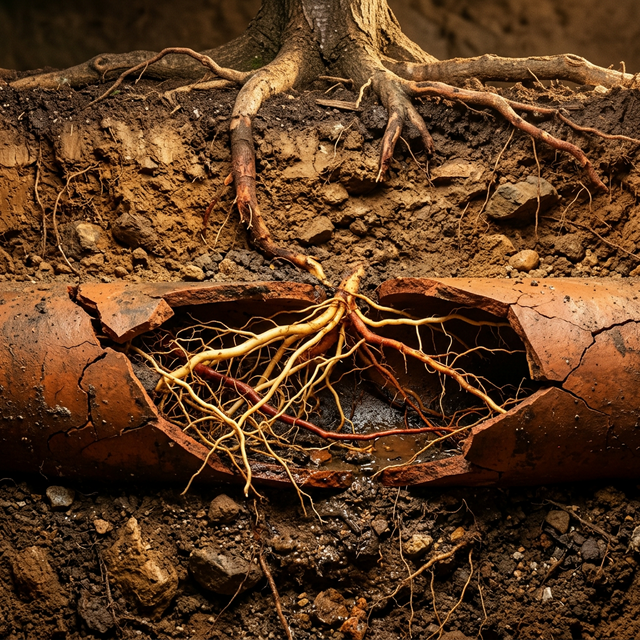
Approximately 50% of all sewer line clogs and failures in residential properties are caused by tree root intrusion. Unlike a sudden burst pipe, root damage builds gradually — which is exactly why it's so dangerous. By the time symptoms appear, the damage is often already severe.
- How Tree Roots Enter Sewer Pipes
- Warning Signs of Root Intrusion
- Worst Tree Species for Sewer Lines
- Diagnosing Root Intrusion
- Treatment Options Compared
- Root Killer Chemicals: What Works
- Repair Options When Damage Is Severe
- Cost Breakdown (2026)
- Preventing Future Root Intrusion
- Frequently Asked Questions
1. How Tree Roots Enter Sewer Pipes
Sewer pipes carry warm, moist, nutrient-rich water — exactly what tree roots are seeking. Roots don't attack sewer pipes randomly; they're drawn to them with extraordinary precision through chemical signals in the soil.
The entry points are almost always pre-existing gaps: hairline cracks in aging clay or concrete pipe, loose joints between pipe sections, deteriorated rubber gaskets, or construction damage. Once the first root tendril enters a pipe, it grows toward the water flow inside. The root thickens and expands, widening the crack, until entire root masses fill the pipe interior.
The progression typically looks like this:
- Hair-fine root penetrates a micro-crack or loose joint. No symptoms yet. The pipe is still functional.
- Root grows toward the water flow and branches. Intermittent slow drains may begin. Easy to misattribute to normal usage.
- Root mass accumulates debris. The root acts like a net, catching toilet paper, grease, and solids. Partial blockages become frequent.
- Roots expand the crack. The pipe joint or crack widens. The mechanical stress begins to fracture surrounding pipe material.
- Pipe collapse or full blockage. Full sewage backup or pipe failure. Emergency repair required.
2. Warning Signs of Root Intrusion
Because root intrusion develops slowly, early signs are subtle. Knowing what to look for could save you from a $10,000+ emergency repair.
- Recurring drain slowdowns throughout the house. Not just one drain — multiple fixtures slowing at the same time indicates a main line issue.
- Gurgling sounds from toilet or drains after flushing or running water elsewhere. Trapped air from partial blockage causes this.
- Toilet requires plunging more than once a month. Roots accumulating debris make toilets the first fixture to back up.
- Unusually lush green turf above the sewer line path. Leaked sewer water acts as outdoor fertilizer, creating a visible green stripe across your lawn.
- Slight sewage odor in the yard. Cracked pipes let gases escape through soil before reaching your nose strongly.
- Visible root growth near clean-out access. If you open your outdoor clean-out access and see roots, expect significant intrusion farther into the line.
3. Which Tree Species Pose the Highest Risk
Not all trees are equally aggressive. The species, its proximity to the sewer line, and local soil moisture all influence risk. Trees closer than 10 feet from the sewer line path should be considered at-risk regardless of species.
Aggressive root systems, deep spread, actively seek moisture
Moderate root aggression, lower risk with distance > 20 ft
Compact root systems, still keep 10+ ft from sewer lines
No significant root pressure risks, safe near sewer paths
Tree roots commonly extend 2–3x the tree's height horizontally. A 40-foot willow tree may have roots reaching 80–120 feet from its base. Never assume a tree is "far enough" from your sewer line without mapping your line's exact path.
4. Diagnosing Root Intrusion
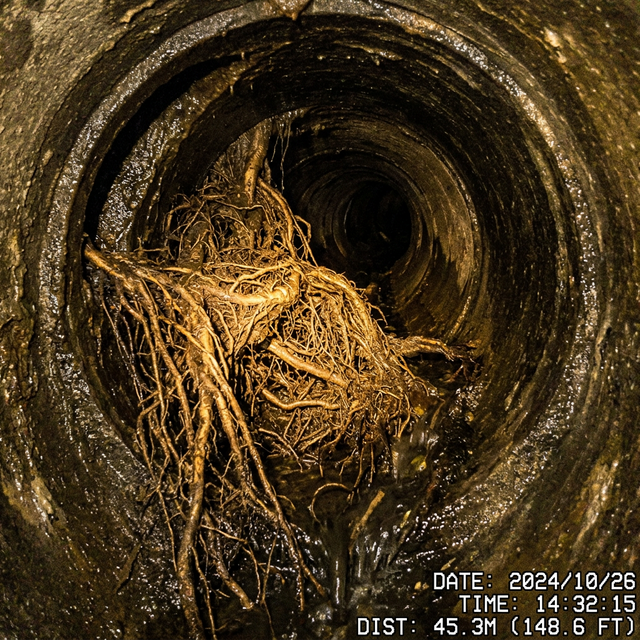
The only definitive way to confirm root intrusion — and determine its severity — is a sewer camera inspection. A licensed plumber threads a waterproof camera through your clean-out access and along the full main line, recording everything found.
A proper diagnosis should establish:
- Location of root entry points (measured from access point)
- Density of root infiltration (minor tendrils vs. full mass blockage)
- Structural damage to pipe from root expansion
- Pipe material and overall remaining condition
- Whether spot treatment is viable or full repair is required
Always request the raw recording of your sewer camera inspection — not just a verbal report. This lets you get second opinions and protects against recommendations to repair damage that doesn't actually exist.
5. Treatment Options Compared
| Treatment | What It Does | Effectiveness | Recurrence |
|---|---|---|---|
| Mechanical Cutting (snake/saw) | Cuts roots inside the pipe | High (immediate) | Roots regrow in 6–18 months |
| Hydro-Jetting | High-pressure water clears roots and debris | Very High | Roots regrow; longer interval than snaking |
| Foaming Root Killer | Kills root tissue, slows new growth | Moderate–High | Annual maintenance needed |
| Copper Sulfate | Toxic to root tissue | Moderate | Banned in many areas; aquifer risk |
| Pipe Lining (CIPP) | Seals all entry points permanently | Permanent | Eliminates regrowth into pipe |
| Pipe Replacement | Removes old pipe entirely | Permanent | Only external roots remain |
6. Root Killer Chemicals: What Actually Works
Chemical root killers are a maintenance tool, not a repair solution. They reduce growth rate and kill active root tissue in the pipe, extending the interval between professional cleanings. They cannot undo structural pipe damage caused by roots.
Foaming Root Killers (Recommended)
The most popular and effective option for maintenance. Foaming formulas (using dichlobenil as the active ingredient) are flushed down the toilet, expand to fill the pipe, and contact root tissue throughout the line. Brands like RootX and Roebic are widely available. Cost: $30–$80 per annual treatment.
Copper Sulfate Crystals (Caution Required)
Copper sulfate crystals poured down drains kill root tissue effectively but pose groundwater contamination risks. Check your local regulations before using — copper sulfate is banned or restricted in many municipalities due to its impact on soil microbiomes and aquifer quality.
If a camera inspection shows roots have cracked or structurally compromised your pipe, chemical treatments cannot reverse that damage. Using root killer on a severely damaged pipe delays necessary repair and allows structural deterioration to worsen.
7. Repair Options When Damage Is Severe
When root intrusion has caused structural damage — cracked pipe, separated joints, or collapsed sections — chemical treatment is no longer sufficient. You'll need one of these approaches:
Spot Repair
If the root entry point is a single cracked joint or small section of damaged pipe, a plumber can excavate just that area and replace it. Best when damage is truly localized to one or two entry points. Cost: $500–$2,500.
Trenchless Pipe Lining (CIPP)
After hydro-jetting clears the roots, a CIPP liner is installed inside the old pipe — sealing all existing cracks and joints permanently. This is the most cost-effective long-term solution for pipes with widespread root entry points but without total collapse. Full guide to trenchless repair →
Pipe Replacement (Open-Cut)
Required when pipe has fully collapsed or the material is Orangeburg, which cannot support a lining. Excavation removes the old pipe entirely and installs new PVC. Higher cost but permanent solution regardless of root species.
8. Real Cost Breakdown (2026)
| Service | Low | Average | High |
|---|---|---|---|
| Sewer camera inspection | $150 | $200–$350 | $400 |
| Mechanical root cutting | $200 | $350–$500 | $600 |
| Hydro-jetting (root clearing) | $300 | $450–$700 | $900 |
| Chemical root treatment (DIY) | $30 | $50–$80 | $100 |
| Spot pipe repair (root entry point) | $500 | $1,000–$2,000 | $2,500 |
| CIPP pipe lining (50 ft) | $4,000 | $6,000–$9,000 | $14,000 |
| Full pipe replacement (50 ft) | $5,000 | $7,000–$12,000 | $20,000+ |
9. Preventing Future Root Intrusion
Once you've resolved a root intrusion problem, prevention means managing both the pipe condition and the tree risk.
On the Pipe Side
- Install CIPP lining if not already done — it eliminates all existing entry points
- Schedule camera inspection every 2 years for pipes adjacent to mature trees
- Apply annual foaming root treatment as a maintenance routine
On the Landscaping Side
- Remove high-risk trees (willow, oak, poplar) within 10 feet of the sewer line path
- Install physical root barriers (HDPE sheeting) along the sewer line route when planting new trees
- Choose sewer-safe tree species for future plantings (Japanese maple, crabapple, ornamental pear)
- Keep a diagram of your sewer line path on file — get sewer mapping with your camera inspection